

Injury Prevention Training in Langley, BC
Stay Ahead of Pain and Injury
If you are looking for injury prevention in Langley, BC, our injury prevention training programs at Kenaz Training work with athletes, active adults, and working professionals to find and fix the weak links before they become injuries. Something keeps nagging. Maybe it is a knee that twinges on your runs, a shoulder that flares up when you lift, or a back that is fine until it is not. You have not had a serious injury yet, but you have had enough close calls to know one is coming if you do not do something about it. Our registered kinesiologists use movement screens and smart programming to find where you are vulnerable and address it before it turns into an injury, specific to your body, your sport, and your life.
Why Injury Prevention Matters
The best injury is the one that never happens. Proactive training is always more effective, less costly, and less painful than reactive treatment after something goes wrong.
Most injuries do not happen suddenly. They develop over time through repeated stress on weakened tissues, poor movement patterns, and unaddressed muscle imbalances. By the time you feel pain, the underlying issue has often been building for weeks, months, or even years.
Injury prevention training identifies and addresses these problems before they become painful. It is the difference between fixing a small crack in your foundation and rebuilding after a collapse.
An injury does not just hurt. It takes things away. The sport you love, the work you depend on, the hike you planned, the season you trained all year for. For athletes, a preventable injury can derail a season. For working adults, it can mean lost income. For seniors, a fall can trigger a cascade of health complications. Proactive training is an investment that pays for itself many times over.

Who Benefits from Injury Prevention Training?
Many people searching for an injury prevention personal trainer near me actually need a kinesiologist-led injury prevention program that targets their specific weak links and sport or job demands.
Injury prevention is not just for athletes. Anyone with a body they want to keep working well can benefit from proactive training.
Athletes
Competitive and recreational athletes face high injury risk from repetitive training loads and the physical demands of competition. Our prevention programs address the specific injury patterns common to your sport, including ACL tears, shoulder injuries in overhead sports, hamstring strains in sprinters, and overuse injuries in youth athletes. Building proper movement foundations early prevents the issues that can end a season or a career.
Active Adults & Seniors
Staying active as you age requires a body that can handle the demands you place on it. Our programs for active adults and seniors focus on maintaining mobility, balance, and strength to prevent falls, strains, and the gradual loss of function that leads to a less active lifestyle. Whether you hike, golf, garden, or simply want to stay independent, prevention training keeps you doing what you love.
Desk Workers & Laborers
Hours at a desk create stiffness, weakness, and postural imbalances that eventually show up as neck pain, back pain, and shoulder issues. Physical laborers face repetitive strain, overuse injuries, and the cumulative toll of demanding work. Either way, your body is taking a daily hit. Our prevention programs address the specific risks of your occupation before something gives.
Post-Rehab Clients
If you have recently recovered from an injury, you already know how disruptive it is. What most people do not know is that the first year after recovery is when re-injury risk is highest. Our prevention programs build on your rehabilitation work, strengthening the areas around your previous injury and addressing the compensation patterns that developed during recovery.
People With a History of “Same Injury, Different Day”
If you keep tweaking the same knee, the same shoulder, the same lower back, that is a pattern. Not bad luck. Our movement assessment finds exactly why it keeps happening and builds a program to break the cycle. Most clients find the root cause is somewhere they never expected.
Anyone Returning to Activity
After a long break from training, your fitness comes back faster than your tissues can adapt. That gap between how hard you want to train and how much your body can currently handle is exactly where injuries happen. Prevention training bridges that gap so you come back strong, not sidelined again in three weeks.
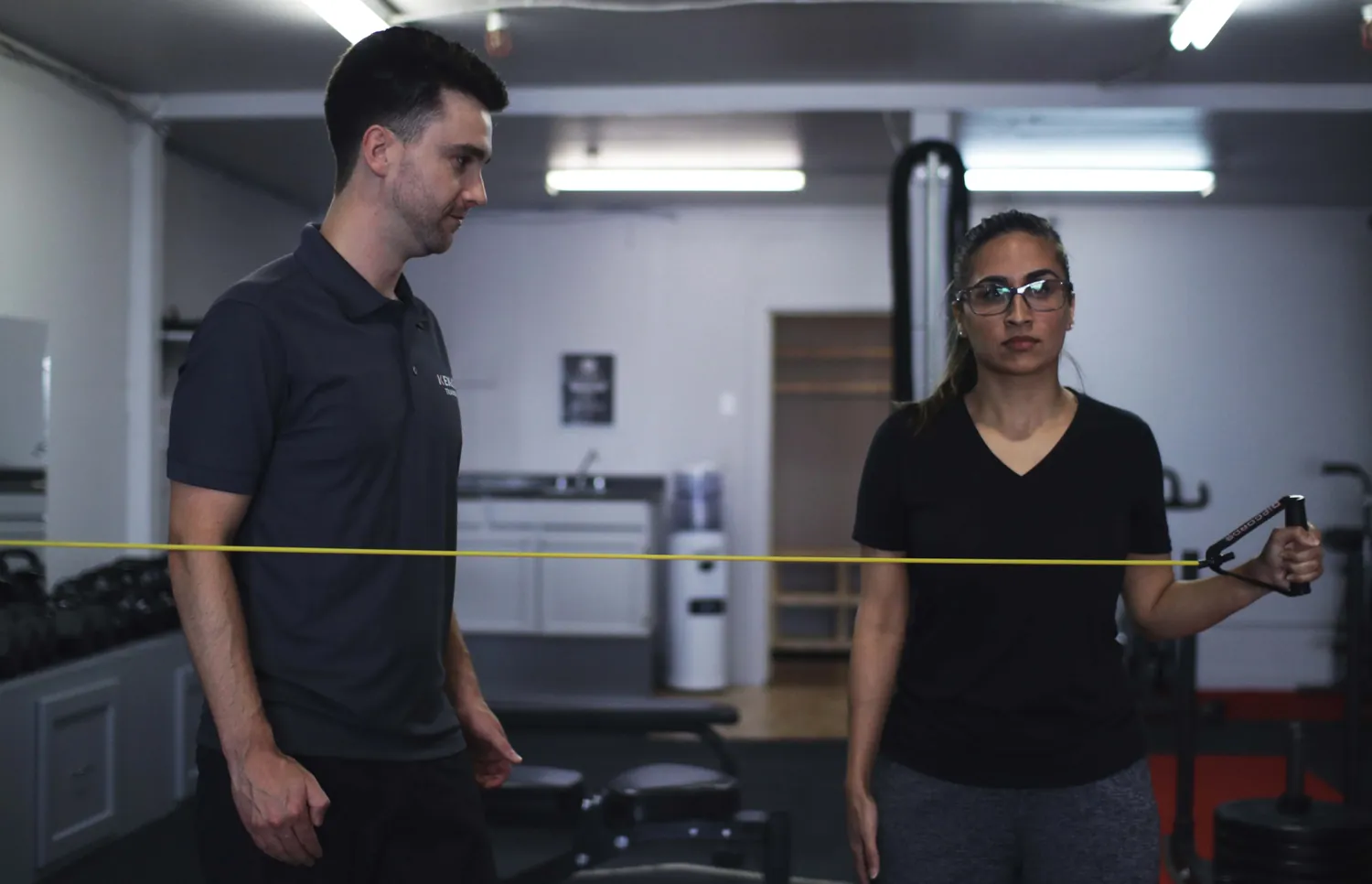
Find Out Where Your Body Is Vulnerable
We’ll screen your movement, identify your weak links, and show you exactly what a prevention program would look like for your body.
What Our Clients Say
Real people who chose prevention over reaction, and what that decision gave them back.
“After a knee fracture, Sheldon helped me get back into playing soccer without any residual pains.”
“I’ve noticed significant changes in my sprinting, jumping, and recovery after just 4 months.”
“At almost 60, I’m in the best shape of my life. I am pain-free with increased energy and vigour.”
“I am 66 and have ankylosing spondylitis. Training has made simple things like a shoulder check while driving so much easier.”
“Helped me gain shoulder stability I’ve never had before.”
“I shopped around and spoke to 8 different kinesiologists… this guy changed my life.”
What Your First Month Looks Like
No guesswork or random workouts. Here is exactly what your first four weeks of injury prevention training look like.
Week 1 – Your Movement Baseline
Your first session is a Functional Movement Screen (FMS). We observe seven fundamental movement patterns, score your mobility and stability, and identify asymmetries and compensations you may not even know you have. Most clients find this genuinely eye-opening. You leave with a clear picture of where your body is vulnerable and exactly what needs to change.
Weeks 2–3 – Targeted Corrective Work
Your kinesiologist builds a program around your specific risk factors. Corrective exercises address the movement dysfunctions the screen revealed. Strengthening work targets the muscles that protect your most vulnerable areas. Mobility drills restore the range of motion your body needs to move without compensating. Every exercise has a specific reason connected directly to your results.
Weeks 3–4 – Progress Starts Showing
By week three, most clients notice the nagging feelings start to settle. Movement feels more controlled. Activities that used to create discomfort feel more stable. The chronic tightness in the usual spots starts to loosen. This is the corrective phase doing its job. You are building the foundation that keeps you out of the physio office.
After Month 1 – The Long Game
Prevention work does not end after month one. As your movement quality improves, your program progresses from corrective exercises to more complex, functional movements that match the demands of your sport, job, or daily life. We re-screen every 6 to 8 weeks to track improvements and adjust. The goal is a body that can handle whatever you throw at it.
What You Get With Injury Prevention Training at Kenaz
Every injury prevention client at Kenaz gets:
- Functional Movement Screen (FMS) — a standardized 7-movement assessment conducted by a registered kinesiologist that identifies your specific risk factors before you train
- Personalised prevention program — designed around your movement screen results, injury history, activity demands, and goals. Not a generic template.
- 1-on-1 supervised sessions — in our private, appointment-only facility in Langley. No crowds, no distractions, no cookie-cutter classes.
- Trainerize app access — view your program, track your sessions, and message your kinesiologist between appointments
- Regular re-screening — every 6 to 8 weeks we reassess your movement to measure progress, identify new focus areas, and advance your program
- Education on your body — you will understand why each exercise is in your program, what it is protecting, and how to apply the principles outside the gym
Book your free consult to see exactly what this would look like for you →

Common Areas We Address
These are the areas where injury most commonly develops, and where prevention training makes the biggest difference.
Shoulder Impingement
Strengthening rotator cuff muscles, improving scapular stability, and restoring overhead mobility to prevent painful impingement and rotator cuff issues. Common in overhead athletes, swimmers, and desk workers.
Knee Instability
Building quadriceps, hamstring, and hip strength to stabilize the knee joint and reduce the risk of ACL tears, meniscus injuries, and patellofemoral pain. Especially important for running and court sports.
Lower Back
Strengthening core muscles, improving hip mobility, and teaching proper lifting mechanics to protect the lumbar spine from strain and disc issues. The most common source of work-related injury and time off.
Ankle Sprains
Improving ankle stability, proprioception, and lower leg strength to prevent the recurring ankle sprains that plague many athletes and active individuals. Particularly valuable for trail runners, basketball, and soccer players.
IT Band & Hip Issues
Addressing hip weakness, glute activation deficits, and lateral stability to prevent IT band syndrome, hip bursitis, and related lower extremity problems common in runners and cyclists.
Neck & Upper Back
Correcting postural imbalances and thoracic mobility restrictions that drive chronic neck tension, headaches, and upper trap tightness. Desk workers and overhead athletes both benefit significantly.
Our Injury Prevention Methodology
We use movement screens and targeted training to spot your weak links and build a plan to fix them. Here is what that looks like in practice.
- Functional Movement Screening (FMS): A standardized 7-movement assessment that shows us how you actually move, not how you think you move. It identifies asymmetries, compensations, and limitations before they become pain.
- Selective Functional Movement Assessment (SFMA): A more detailed assessment used when pain or movement dysfunction is already present. It tells us whether your limitation comes from a mobility restriction, a stability deficit, or a motor control issue. The fix is completely different depending on which one it is.
- Identifying Compensation Patterns: When one area of your body is weak or restricted, other areas pick up the slack. Over time, those compensations create overload. That is usually where the injury eventually shows up. We find exactly where your compensations are and address them before they become a problem.
- Progressive Strengthening: We build strength in the specific muscles and movement patterns that protect your most vulnerable areas. Programs progress gradually from simple corrective exercises to complex, functional movements that match the demands of your sport, job, or daily life.
- Mobility Work: Restricted mobility forces your body to compensate, creating stress on joints and tissues that were not designed to handle it. We restore optimal range of motion through targeted stretching and movement drills.
- Ongoing Monitoring: We re-screen regularly to track your progress, identify new areas of focus, and make sure improvements are holding. Prevention is not a one-time fix. It is an ongoing process.
What You Can Expect Working With Us
- No pressure. The free consult is a conversation, not a sales pitch. If we are not the right fit, we will tell you and point you toward someone who is.
- No cookie-cutter programs. Your program is built from your movement screen results, injury history, and activity demands. Two people with the same complaint will get different programs because their bodies are different.
- Clear communication. Your kinesiologist will explain every exercise, why it is in your program, what it is protecting, and what to expect as you progress.
- Adjustments when needed. If something is not working or your situation changes, your program adapts. You are not locked into a plan that no longer fits your body or your life.
- Coordination with your care team. If you are working with a physiotherapist, chiropractor, or other provider, we communicate with them to make sure your prevention work complements your broader care plan.
If your first session is not what you expected, tell us. We will adjust your plan, clarify expectations, or help you find a better fit. We have been doing this since 2018 and we are serious about the outcome.
Related Services
If you are dealing with an existing issue, or ready to take your performance further, these pages are worth a look:
- Injury Rehabilitation in Langley — structured recovery with progressive return-to-function programming
- Chronic Pain Management — graded exercise for persistent pain conditions that have not fully resolved
- Kinesiology in Langley — kinesiologist-led assessment and exercise-based programs for complex movement and injury issues
- Performance Training — sport-specific strength, speed, and conditioning for athletes at every level
- Personal Training in Langley — 1-on-1 coaching to rebuild strength and confidence after injury or a long break
- ADL Training — activities of daily living programs for older adults and post-rehab clients rebuilding independence
Frequently Asked Questions About Injury Prevention Training in Langley
Questions we hear most before people get started.
Anyone who wants to keep their body working well: athletes, active adults, seniors, desk workers, physical laborers, and anyone who has had an injury before and does not want to go back. If you have a recurring issue, a demanding lifestyle, or you simply want to stay active for the long term, injury prevention training is relevant. You do not need to be injured or even in pain to start.
The FMS is a standardized 7-movement assessment that evaluates how you actually move, not how you think you move. It identifies asymmetries, mobility limitations, and compensation patterns that put you at risk for injury. The screen takes about 30 to 45 minutes and gives us a detailed baseline to build your prevention program from. Most clients find it genuinely eye-opening.
Regular personal training focuses primarily on fitness goals: strength, weight loss, performance. Injury prevention training starts with a movement screening and focuses specifically on identifying and correcting the movement patterns, muscle imbalances, and stability deficits that put you at risk. That said, the two often overlap. A good prevention program makes you stronger and more capable, and good personal training includes movement quality work. At Kenaz the line between them is intentionally blurry because both matter.
Most clients train one to three times per week depending on their goals, activity level, and how much corrective work is needed at the start. As your movement quality improves, prevention work often gets integrated into your regular training rather than existing as a separate program. We will recommend a realistic frequency at your assessment based on your situation.
Yes, and this is one of the most common situations we work with. Pain is often the signal that a movement problem has been building for a while. Injury prevention training addresses those underlying patterns, and many clients see their pain reduce significantly as their movement quality and strength improve. If your pain is more complex or acute, we may recommend starting with our injury rehabilitation program and transitioning into prevention work as you progress. We will figure out the right starting point at your consult.
Many extended health plans cover sessions with a registered kinesiologist, which is who leads your injury prevention program at Kenaz. Coverage depends on your specific plan. We will go over your options during your free consult. No surprises.
Injury Prevention Training in Langley, BC
Kenaz Training is located at 9295 198 St #109, Langley, BC V1M 3J9, a private, appointment-only facility where registered kinesiologists provide movement assessment and exercise-based programs under one roof.
We work with clients from across the Fraser Valley, including Langley, Surrey, Abbotsford, Maple Ridge, White Rock, Cloverdale, Walnut Grove, Willoughby, Murrayville, Aldergrove, Fort Langley, Brookswood, Langley Township, Delta, and Pitt Meadows.
Don’t Wait for the Injury. Start Before It Happens.
Book your FREE consult. We will screen your movement, identify where you are vulnerable, and give you a clear picture of what your prevention program would look like. You will leave knowing exactly what is putting you at risk, whether you train with us or not. If we are not the right fit, we will tell you and point you toward someone who is.