
If you have been managing pain for months or years and feel like you have tried everything, there is a good chance no one has built you a proper movement program.
Book Your FREE Consult →By Kenaz Training Team
When pain sets in, the instinct is to rest. Take it easy. Wait for it to pass. That advice makes sense for an acute injury in the first few days. But for pain that has lasted weeks, months, or years, rest is often the reason people stay stuck. The research on chronic pain is consistent: graded, progressive movement is not just helpful for long-term pain relief. For most people, it is the treatment.
This is not about pushing through pain or ignoring your body. It is about understanding why pain persists, what rest does to the tissues and the nervous system over time, and what a proper movement program actually looks like when it is built around where you are right now.
Why Rest Fails for Most Chronic Pain
Rest is effective in the first 24 to 72 hours after an acute injury. It protects damaged tissue, reduces inflammation, and gives your body time to begin the repair process. That is where its usefulness ends for most people.
Once you move past the acute phase, continued rest does three things that make pain worse:
- It deconditions your body. Muscles weaken. Joints stiffen. Connective tissue loses its capacity to absorb load. Activities that used to be routine start to feel threatening and uncomfortable because your body literally has less capacity to handle them.
- It reinforces avoidance. Every time you avoid a movement because it hurts, you teach your nervous system that the movement is dangerous. Over time, the list of things that trigger pain grows.
- It removes one of the most effective pain modulators available. Movement stimulates endorphin release, reduces cortisol, improves sleep quality, and directly downregulates pain signalling in the central nervous system.
For people managing back pain, arthritis, fibromyalgia, post-injury pain, or pain that lingers after surgery, rest is not neutral. Over time, it actively makes the problem worse.
What Happens to Your Body When You Stop Moving
The changes that occur from inactivity happen faster than most people expect. Within a week of significantly reduced activity, muscle strength and mass begin to decline. Cartilage in joints loses some of its ability to absorb impact. Tendons and ligaments become less pliable. Circulation decreases.
Over weeks and months, these changes compound. Daily tasks that once felt easy start to feel like effort. Posture shifts. Movement patterns change as you compensate around areas of pain. Those compensations create new stress on adjacent joints and muscles, often producing pain in areas that were not originally injured.
The deconditioning cycle is one of the most common reasons people with chronic pain describe their situation as getting worse over time, even without a new injury or diagnosis. The original problem may have stabilized. But the downstream effects of avoiding movement have accumulated.
Central Sensitization: Why Pain Outlasts the Injury
One of the most important things to understand about chronic pain is that it is not always a reliable signal of tissue damage. In the early stages after an injury, pain is a warning system. It tells you something is wrong and needs protection. That function is appropriate and useful.
But the nervous system is adaptable. When pain persists for months, the system that processes pain signals can become amplified. Your brain and spinal cord start responding to normal sensory input as if it were threatening. Light touch, gentle movement, temperature changes, and activities that are objectively safe can all trigger a pain response that is out of proportion to any actual tissue threat.
This is called central sensitization, and it is common in people with back pain, fibromyalgia, chronic headaches, and pain that has not responded well to passive treatments or rest.
The most effective way to address central sensitization is graded movement. Exposing your nervous system to safe movement, consistently and at the right level of challenge, teaches it to recalibrate. Over time, the sensitivity reduces, the range of what feels safe expands, and daily function improves even when the original tissue injury has long since healed.
Managing Chronic Pain in Langley?
Our registered kinesiologists build movement programs around where you are right now, not where you think you should be. No pressure, no guesswork. Book a free consult and we will assess what is driving your pain and what a realistic program looks like.
Book a Free Consult →Why Movement Works
Movement addresses chronic pain through several mechanisms at once:
- Graded exposure reduces fear and sensitivity. When you move through a range of motion safely and consistently, your nervous system learns that the movement is not a threat. Pain responses gradually decrease as your brain updates its threat assessment.
- Progressive loading builds tissue capacity. Tendons, cartilage, and muscles adapt to the demands placed on them. A well-designed loading program increases the capacity of your tissues to handle daily activity without triggering a flare.
- Endorphin release reduces pain signalling. Exercise stimulates the release of endorphins and other natural analgesics. Regular movement raises your baseline pain threshold over time.
- Improved sleep and reduced cortisol change your pain experience. People in chronic pain often have disrupted sleep, which increases cortisol and amplifies pain sensitivity. Regular physical activity improves sleep quality, which in turn reduces the nervous system's sensitivity to pain stimuli.
- Strength reduces joint load. For conditions like osteoarthritis, stronger muscles around a joint absorb more of the impact from daily activity. The joint itself takes less stress with every step, every lift, every staircase.
Conditions Where Movement Is Especially Important
Movement-based rehabilitation is relevant across a wide range of chronic conditions. These are some of the most common situations where a structured movement program makes a significant difference:
- Chronic back and neck pain. The single most evidence-supported intervention for persistent low back pain is graded exercise. This includes strength training, mobility work, and aerobic activity progressed at the right pace for your baseline.
- Osteoarthritis. Exercise reduces pain and improves function in people with knee, hip, and shoulder arthritis more consistently than most passive treatments. Strengthening the muscles around the affected joint reduces the mechanical load on the joint surface itself.
- Fibromyalgia. Aerobic exercise and progressive resistance training are among the most effective interventions for fibromyalgia. The research is consistent: people who move regularly report lower pain levels, better sleep, and higher quality of life than those who rest.
- Post-accident or post-injury pain. Pain that persists after an ICBC claim, a workplace injury, or a sports injury often involves a combination of residual tissue sensitivity and deconditioning. A structured kinesiology program addresses both.
- Post-surgical pain. People who complete a progressive exercise program after surgery return to full function faster and with lower rates of reinjury than those who rest after discharge from physiotherapy. See our post-surgical rehab page for what that looks like.
- Chronic tendinopathy. Tendons respond directly to load. Graded tendon loading through progressive resistance exercise is the standard of care for patellar tendinopathy, Achilles tendinopathy, rotator cuff conditions, and lateral elbow pain.
What the Right Movement Program Looks Like
The movement program that helps chronic pain is not a generic workout. It is built around three things: your specific condition, your current movement capacity, and your goals.
A good program for someone managing chronic pain typically includes:
- A starting point matched to your actual baseline. Not the exercises you could do before the pain started. Not what you think you should be able to handle. What your body can actually do today without triggering a significant flare afterward.
- Progressive overload applied carefully. Load, volume, and intensity increase over time, but slowly enough that your nervous system and tissues adapt without being overwhelmed. The goal is consistent, small steps forward.
- A mix of strength, mobility, and aerobic work. Most chronic pain conditions benefit from all three. Strength reduces tissue load. Mobility restores range. Aerobic work regulates the nervous system and improves sleep.
- Education about pain. Understanding why pain persists, what triggers it, and why movement is safe and helpful is itself part of the treatment. People who understand pain respond better to exercise-based programs than people who are simply told to do exercises without context.
- Check-ins and adjustments. Chronic pain is not linear. There are better weeks and harder weeks. A good program adjusts based on how you are responding, not a fixed schedule that ignores what your body is telling you.
How to Start When Pain Feels Like a Barrier
The most common barrier to starting a movement program is the fear that movement will make things worse. That fear is understandable, especially if you have had flare-ups in the past after activity. But there is a difference between pain that signals real tissue damage and pain that reflects nervous system sensitivity. Most chronic pain falls into the second category.
A few principles that help:
- Start below your perceived limit. If you think you can walk for 20 minutes before pain increases, start with 10. Build a consistent baseline before pushing it. Consistency matters more than intensity in the early stages.
- Expect some discomfort, not damage. A small increase in familiar pain during or after exercise is normal and not a sign of injury. Sharp, new, or worsening pain that lasts significantly beyond the activity is worth flagging.
- Separate pain from harm. This is difficult when you have been conditioning yourself to associate movement with pain for a long time. Working with a kinesiologist who understands pain science helps you distinguish what is safe from what is actually damaging.
- Let the first few weeks be about showing up, not performing. The neurological and physical adaptations that reduce pain take time. Consistency over the first 6 to 8 weeks matters more than how hard you train.
What Kenaz Clients in Langley Say
★★★★★ Rated 5.0 on Google from 250+ reviews in Langley
“I had chronic back pain for two years. Within three months of starting with Kenaz I was doing things I thought I would never do again.”
“They actually listened to what I was experiencing, built a plan around it, and adjusted as I went. Not a cookie-cutter program.”
What We Do at Kenaz Training in Langley
At Kenaz Training, our BCAK-registered kinesiologists work with people managing a range of chronic pain conditions including back and neck pain, arthritis, fibromyalgia, post-accident injuries, and pain that has persisted beyond surgery or physiotherapy discharge.
For many of our clients, this becomes their long-term chronic pain management plan in Langley, built around movement instead of endless rest and passive treatments.
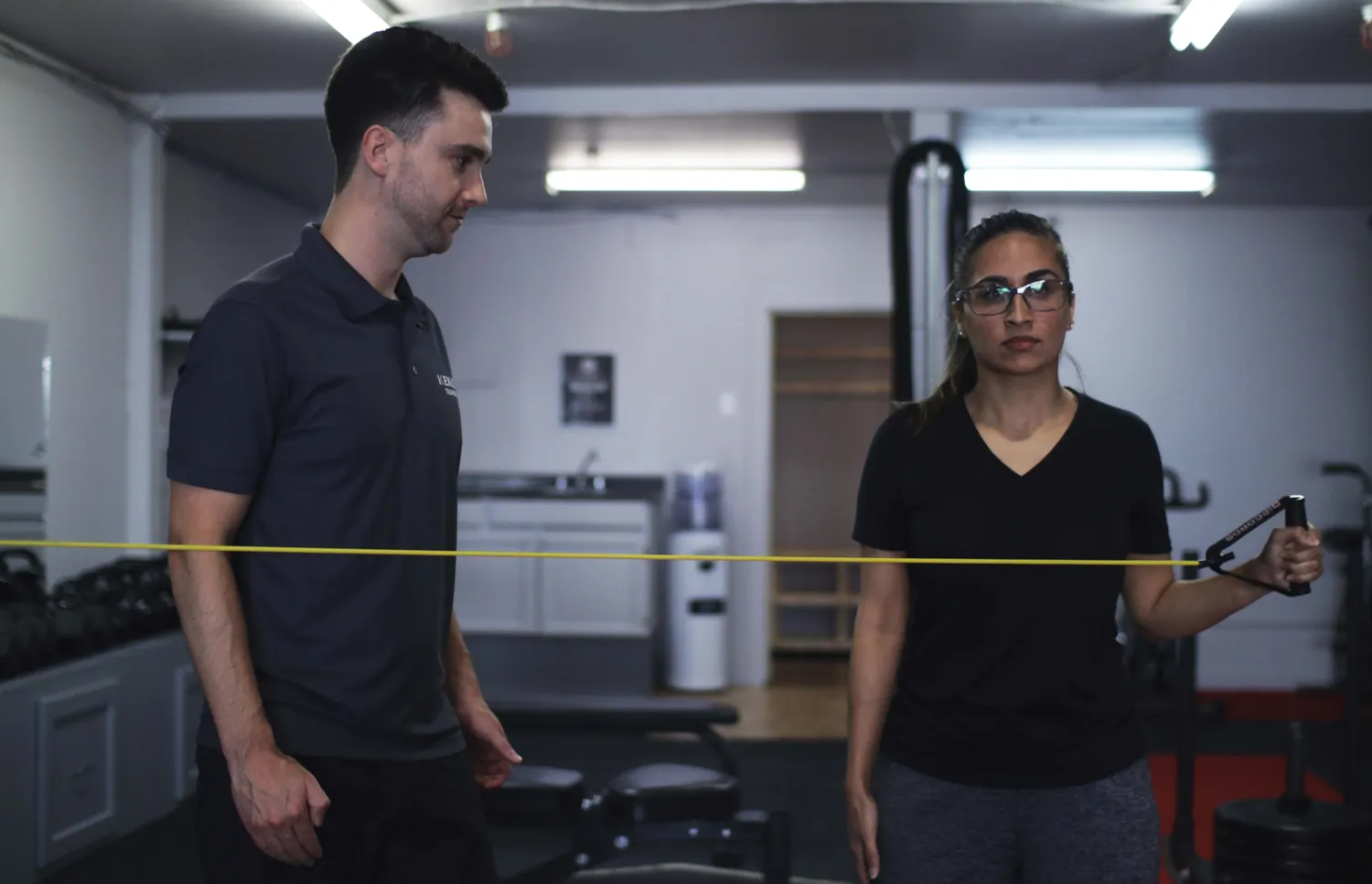
Every client starts with a movement assessment. We assess how you move, identify what is limiting you, and build a program that starts where your body actually is. Sessions are one-on-one in our private Langley facility. Your kinesiologist is with you for the full session, adjusting load and technique in real time.
Between sessions, we stay in contact through our app. Daily check-ins, workout tracking, and habit accountability. That day-to-day contact is part of how the program works, not an add-on.
If your pain stems from a motor vehicle accident, ICBC typically covers active rehab sessions for eligible claims. For most claims, ICBC pre-approves up to 12 active rehab sessions in the first 12 weeks after the accident date. We handle the paperwork and coordination directly. See our ICBC active rehab page for details.
If you are managing chronic pain and want a clear picture of what a movement-based approach would look like for your situation, the free consult is the right starting point. No pressure, no obligation. We will assess what is going on, tell you honestly what we think will help, and give you a clear next step whether you work with us or not.
Key Takeaway: For most chronic pain conditions, movement is not something to add once you feel better. It is what gets you there. The right program, built at the right pace, trains your body and your nervous system to feel safe again and function without constant pain.
Frequently Asked Questions
Yes. The evidence is consistent: graded, progressive movement is one of the most effective treatments for most chronic pain conditions. This includes back pain, arthritis, fibromyalgia, and pain that persists after injury or surgery. Rest reduces pain short-term but increases sensitivity and deconditioning over time. The key is starting at the right level and progressing carefully.
When you stop moving due to pain, your muscles weaken, joints stiffen, and your nervous system becomes more sensitized. Your body starts interpreting normal activity as threatening, which amplifies the pain signal even without new tissue damage. This is called central sensitization. Movement, done gradually and consistently, trains your nervous system to feel safe again and rebuilds the physical capacity your body needs.
The best movement is the kind you can do consistently without a significant flare-up afterward. For most people, this starts with low-load, controlled exercise: walking, gentle resistance training, mobility work, and targeted strengthening. The program should be built around your specific condition, your movement patterns, and your baseline tolerance. A registered kinesiologist can assess where you are and build a program that progresses at the right pace for your body.
Most people notice meaningful improvement in 6 to 12 weeks of consistent, progressive movement. Some see changes sooner. The timeline depends on how long you have been in pain, your baseline fitness, and how consistently you train. Pain does not need to be fully gone before you start. In fact, waiting for zero pain before moving is one of the most common reasons people stay stuck.
In most cases, yes, with the right guidance. The goal is not to train through sharp, worsening pain. It is to find the level of movement your body can handle today, do that consistently, and build from there. A registered kinesiologist will assess your baseline, identify what movements are safe to start with, and progress your program in a way that challenges your body without triggering significant flares. Call 778-800-7015 or book a free consult and we can help you figure out where to start.