
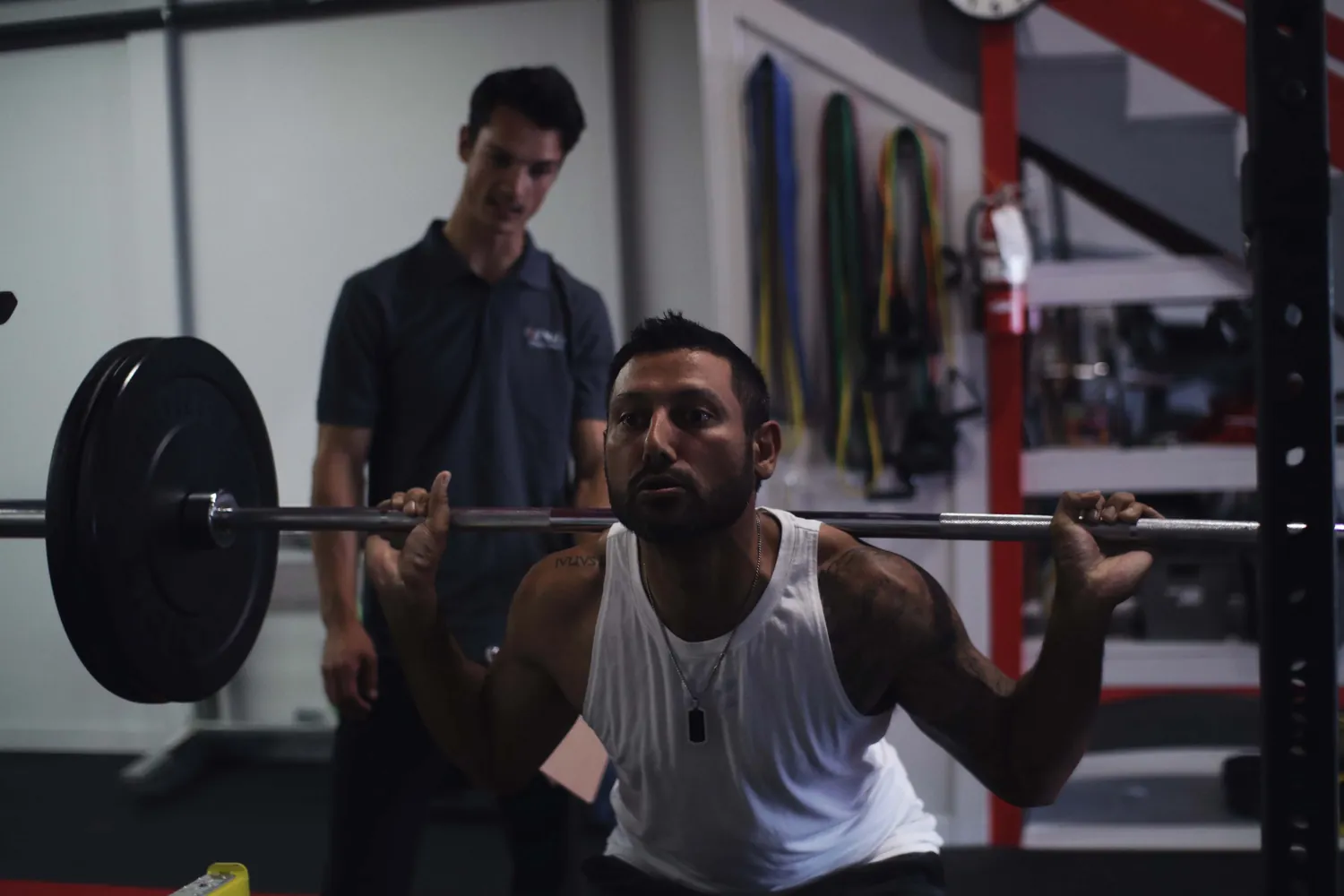
The right trainer changes everything. The wrong one costs you time, money, and in some cases, your health. Here is how to tell the difference.
Meet Our Team — Free Consult →By Kenaz Training Team
Hiring a personal trainer is one of the best investments you can make in your health, but only if you choose the right one. The number of personal trainers and gyms in Langley has grown fast, which means you have more options than ever and a wider gap in quality. Knowing what to look for, what questions to ask, and what red flags to watch for will help you find a personal trainer in Langley who delivers real results and keeps you safe.
What Certifications and Education Matter
The first thing to check is whether a trainer holds a recognized certification. In Canada, reputable certifications include those from the Canadian Society for Exercise Physiology (CSEP), the National Strength and Conditioning Association (NSCA), Canfitpro (Canadian Fitness Professionals), and the American College of Sports Medicine (ACSM). A degree in kinesiology, exercise science, or a related field is an even stronger indicator of knowledge and competence.
Certifications matter because they demonstrate that a trainer has completed formal education in anatomy, exercise physiology, program design, and injury prevention. In an unregulated industry where anyone can call themselves a personal trainer, credentials are one of the few reliable ways to assess baseline competence. Look for trainers who also maintain current CPR and first aid certifications.
Beyond general certifications, consider whether the trainer has specialized training relevant to your goals. If you are recovering from an injury, look for someone with active rehabilitation or corrective exercise credentials. If you are training for a sport, seek out a trainer with strength and conditioning experience. If you have a chronic health condition, a kinesiologist with clinical exercise training may be the best fit.
Experience and Specialization
Certifications provide a foundation, but experience is where real expertise develops. Ask how long a trainer has been working with clients and what populations they specialize in. A trainer who has spent five years working primarily with post-rehabilitation clients will have different skills than one who focuses on athletic performance or weight loss.
The best trainers can demonstrate a track record of results. Ask for client testimonials, before-and-after examples, or references. Look at their online reviews on Google, social media, or their website. Consistent positive feedback from real clients is one of the strongest indicators that a trainer delivers on their promises.
Questions to Ask During a Consultation
A good trainer will offer a free consultation or assessment before you commit. Use this opportunity to evaluate their approach and communication style. Here are the key questions to ask:
- How do you assess new clients? A quality trainer will conduct a thorough intake that includes a health history, movement assessment, and goal-setting conversation before writing a single exercise.
- How do you customize programs? Avoid trainers who use cookie-cutter templates for every client. Your program should be built around your specific goals, abilities, limitations, and schedule.
- How do you track progress? Look for measurable benchmarks such as strength gains, body composition changes, pain reduction, or functional improvements. A trainer who cannot articulate how they measure success is a trainer who does not prioritize results.
- What happens if I get injured or feel pain during an exercise? The right answer involves modifying the exercise, assessing the issue, and potentially referring you to a healthcare provider. The wrong answer is to push through it.
- What is your cancellation and scheduling policy? Understanding logistics upfront prevents frustration later.
Looking for a Personal Trainer in Langley?
Meet our certified team in Walnut Grove – no contracts, no pressure. Just a clear plan, real coaching, and results you can measure.
Meet Our Trainers →Red Flags to Watch For
Not every trainer who looks the part is qualified to help you safely and effectively. Watch for these warning signs:
- No formal certification or education. A fit physique does not qualify someone to train others. Demand credentials.
- One-size-fits-all programming. If your first session involves the same workout the trainer gives everyone else, they are not paying attention to your needs.
- Pushing supplements or products. A trainer who prioritizes selling you supplements over coaching you through exercises may have misaligned priorities.
- No initial assessment. Jumping straight into intense workouts without understanding your health history, movement quality, and goals is irresponsible and increases your risk of injury.
- Dismissing pain or discomfort. A trainer who tells you to push through sharp pain does not understand the difference between productive challenge and potential injury.
- Constantly on their phone. Your session time should be focused entirely on you. A trainer who is distracted is a trainer who is not watching your form or paying attention to your safety.
Private Studios vs. Big Box Gyms
Where you train matters almost as much as who you train with. Large commercial gyms offer personal training, but the experience often comes with significant drawbacks. Trainers at big box gyms frequently work under sales pressure, may have high client volumes that limit their attention, and often train clients on a busy gym floor surrounded by distractions.
Private training studios offer a fundamentally different experience. Sessions take place in a controlled, focused environment without the noise, crowds, and wait times of a commercial gym. The equipment is curated for purpose rather than quantity, and the atmosphere is built around coaching rather than membership sales.
Private studios also tend to attract trainers who are more experienced and more invested in their craft. Because they are not relying on a gym's brand to bring in clients, they must earn business through results and reputation. This creates a higher standard of accountability and professionalism.
The Kenaz Training Difference
At Kenaz Training in Langley, we built our personal training practice around what actually matters: qualified professionals, personalized programming, and measurable results. Our registered kinesiologists hold university degrees in human kinetics and are registered with the BCAK. Our personal trainers hold recognized certifications and have years of experience working with complex, clinical, and high-performance situations.
We operate from a private Walnut Grove training facility designed specifically for one on one and small group coaching. There are no membership sales, no supplement pushes, and no distractions. Every session is focused entirely on you, your goals, and your progress.
What truly sets us apart is our clinical approach. Because our team includes registered kinesiologists, we bring a deeper understanding of injury prevention, rehabilitation, and movement science to every training session. Whether you are a weekend warrior, a competitive athlete, or someone recovering from an injury, we design programs rooted in evidence-based practice and tailored to your unique situation.
We also believe in transparency. Every new client receives a comprehensive assessment, clear goal-setting, and regular progress check-ins. You will always know where you stand and what the plan is moving forward.
Key Point: The right personal trainer holds recognized credentials, conducts a thorough assessment before training you, customizes every program, and earns trust through measurable results — not sales tactics.
Choosing the right personal trainer is a decision that affects your health, safety, and long-term results. Take the time to evaluate your options carefully, ask the hard questions, and invest in a professional who earns your trust through expertise and outcomes.
What Kenaz Clients in Langley Say
★★★★★ Rated 5.0 on Google from 250+ reviews in Langley
“I have been going to Kenaz for about 8 months now and I cannot recommend them enough. The trainers genuinely care about your progress and push you in the right ways.”
“Very knowledgeable staff who take the time to understand your personal goals and limitations. I have seen massive improvements in my strength and overall fitness.”